

Views: 0 Author: Site Editor Publish Time: 2026-07-07 Origin: Site


Organizations often lose valuable operational hours when locked into static room layouts. You also limit your real estate space utilization by keeping bulky, unmoving furniture in your facilities. Modern workspaces and educational facilities require highly dynamic environments. They must transition quickly between traditional lectures, collaborative group work, and open presentation spaces. Transitioning to mobile training tables solves this rigid space problem immediately. This shift moves facility management from reactive space-planning to proactive space optimization. You do need to assess specific product features carefully to ensure success. Evaluating caster durability and nesting mechanisms ensures long-lasting functionality. In this guide, you will learn how wheeled configurations maximize floor space and support diverse learning styles. We will also explore crucial criteria for evaluating commercial-grade furniture options.
Rapid Reconfiguration: Wheeled designs allow single-person room transitions in minutes, drastically reducing facilities labor.
Maximized Real Estate: Nesting and folding features reclaim floor space for multi-purpose use.
Collaborative Flexibility: Modular setups support diverse learning formats and agile methodologies.
Long-Term Cost Efficiency: Reduced manual labor and lower risk of furniture damage yield a verifiable ROI despite higher initial unit costs.
Future-Proof Scalability: Easy inventory management as headcount or spatial requirements fluctuate.
Static tables act as a major bottleneck in active learning environments. They are incredibly heavy and cumbersome. They require multi-person facility teams to move them safely. This manual process creates significant downtime between corporate events or training sessions. When you need to clear a room for an afternoon workshop, physical labor slows everything down. A training table with wheels changes this dynamic entirely. It empowers a single instructor or employee to change layouts instantly. They can shift a room from a traditional classroom grid to collaborative pods without calling maintenance.
You must understand the implementation reality to achieve these outcomes. Success highly depends on the specific hardware quality. You must utilize commercial-grade locking casters. These heavy-duty wheels prevent unintended drift during active use. You also need smooth mobility on varied flooring types. Moving from thick carpets to hard concrete floors requires specific wheel materials. Soft polyurethane wheels usually work best on hard floors. Hard nylon wheels perform better on carpets. Always check these caster specifications before ordering new furniture.
Let us look at a standard reconfiguration process for a dynamic room:
Unlock all front-facing and rear-facing casters on the tables.
Glide the units gently into their new grouping or designated storage perimeter.
Lock the dual-wheel casters firmly to secure the new floor plan.
Engage any under-desk ganging brackets to link the tables together seamlessly.
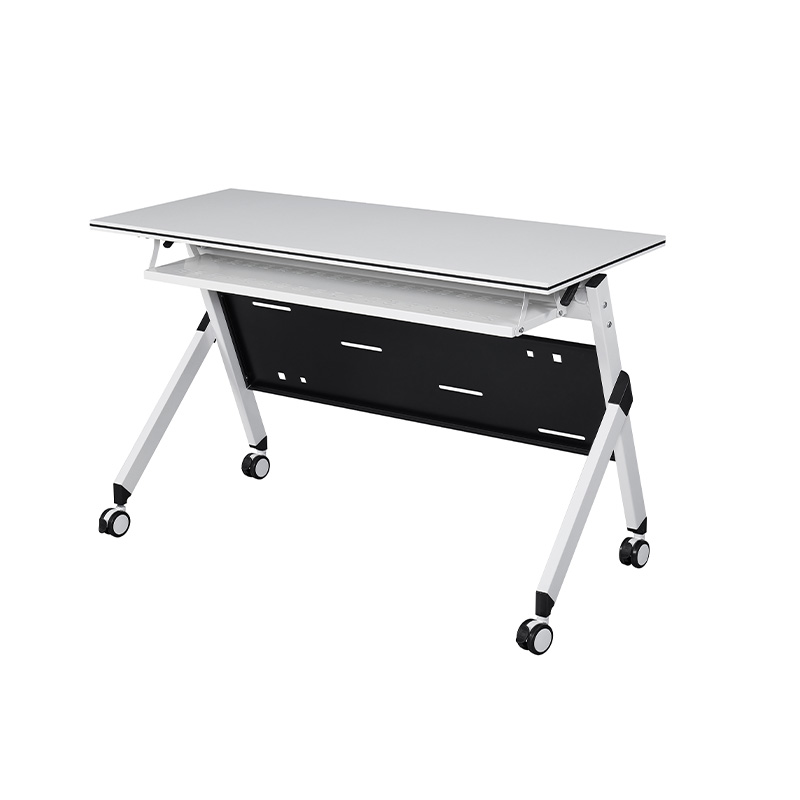
Paying for square footage that sits empty during off-cycles represents a massive sunk cost. Businesses cannot afford to keep rooms dedicated to single functions. Multi-purpose rooms increase real estate efficiency dramatically. You gain immense flexibility by introducing dynamic furniture into your corporate floor plan.
Let us evaluate two distinct space-saving mechanisms. You can choose a flip top training table or a standard folding training table. Each design offers unique spatial advantages. A flip-top model allows the surface to rotate vertically. You can then nest the tables horizontally against walls. This maintains a very small footprint. You do not need to perform any heavy lifting. Conversely, tables with folding legs work better for long-term flat storage. You can stack them safely in dedicated storage closets.
Facility managers face a critical trade-off when planning storage. You must acknowledge that nesting tables still require dedicated perimeter space. They do not vanish completely. You must calculate the exact "nested depth" for your chosen model. Multiply this depth by the total number of units. This mathematical check ensures you have realistic storage capacity in your room.
Here is a breakdown of how the two styles compare:
Feature Evaluation | Vertical Flip-Top Models | Flat Folding Leg Models |
|---|---|---|
Storage Method | Horizontal nesting against walls | Flat stacking on carts or in closets |
Setup Speed | Instant deployment by one person | Requires unstacking and unfolding |
Space Required | Needs moderate perimeter floor space | Needs minimal closet footprint |
Ideal Use Case | Daily or weekly room transitions | Monthly or seasonal storage needs |
Training effectiveness links directly to environmental ergonomics. Stagnant environments often lead to unengaged learners. Dynamic setups keep participants alert and involved throughout the day. Mobile units easily group together to serve different functions. They can form larger boardroom-style layouts for executive meetings. They also break apart rapidly for individual testing or focused solo work.
Instructors frequently use agile methodologies in modern education. These approaches require constant physical movement. Participants switch between standard lectures, group brainstorms, and peer reviews. Your furniture must adapt to these rapid shifts effortlessly. If the furniture resists movement, the collaborative energy dies quickly.
Look for modular shapes when evaluating your options. You want geometric shapes that fit flush against one another. Trapezoid, rectangular, and half-round shapes provide the most versatility. You can create seamless collaborative surfaces by pushing them together. These shapes encourage eye contact and better communication.
Common modular configurations include the following setups:
Classroom Rows: Rectangular units facing the front for standard instruction and exams.
Collaborative Pods: Four trapezoid desks arranged in a circle for team-building tasks.
Open U-Shape: Linked rectangular desks for open dialogue and interactive presentations.
Chevron Style: Desks angled slightly toward the center to improve sightlines for all attendees.
Moving heavy, static furniture creates severe financial impacts over time. Dragging heavy wooden desks frequently leads to chipped edge banding. It also damages expensive floorboards and rips office carpeting. Furthermore, manual lifting increases worker's compensation claims. Lifting injuries cost companies thousands of dollars annually in medical claims and lost time. Moving to wheeled solutions eliminates this physical strain almost entirely.
High-quality training tables are specifically engineered for constant movement. Manufacturers build them to withstand daily spatial transitions. They incorporate protective features like heavy-duty rubber bumpers. They also use impact-resistant polyurethane edging. Robust metal frames mitigate daily wear and tear. These rugged elements protect your physical investment over the long term.
You must still address basic maintenance realities. Mobile tables protect floors and reduce setup labor significantly. However, the casters and flip-mechanisms introduce moving parts. Moving parts naturally require periodic checks to function safely. Facility teams should establish routine inspection schedules.
We recommend following these maintenance practices:
Check and tighten all under-table structural screws quarterly.
Clear carpet fibers, dust, and debris from caster wheels monthly.
Test the flip-mechanism release latches to ensure they engage securely.
Inspect the rubber bumpers for signs of cracking or missing pieces.
Organizations scale at unpredictable rates in today's economy. Training room capacity needs fluctuate wildly from week to week. You might host ten people for onboarding on Monday. You could have fifty attendees for a department-wide summit by Friday. You need adaptable environments to handle these sudden shifts.
Effective inventory management becomes much easier with mobile options. You can effortlessly roll spare units in from other departments. You can bring them out of temporary storage to accommodate sudden spikes in attendees. No one needs to carry heavy wood panels down a long hallway. This adaptability keeps your operations running smoothly.
Purchasing a standardized line ensures long-term success. You want visual and functional consistency across different floors. As the organization grows, maintaining a uniform aesthetic matters deeply. Standardized desks share the exact same ganging brackets. They share the identical height and depth. This standardization allows you to mix and match inventory seamlessly across campus buildings without visual clutter.
Selecting the right furniture requires strict risk mitigation and compliance checks. You should verify BIFMA (Business and Institutional Furniture Manufacturers Association) certification for all commercial purchases. This certification guarantees proper load-bearing capacity. It also ensures strict tip-resistance standards are met. You must also ensure ADA (Americans with Disabilities Act) compliance. Your tables need the correct clearance height. They must provide adequate knee space for users in wheelchairs.
Mobile tables introduce specific challenges for power and data routing. Static desks usually hide messy cables easily inside permanent legs. Moving desks make cable management much harder to control. You must evaluate power solutions carefully to avoid creating tripping hazards. Look for built-in modesty panels on the desks. These panels often double as convenient wire troughs. You should also consider daisy-chain power systems. These systems allow you to plug one table directly into another. They remain highly suitable for mobile setups.
Follow these next-step actions to make an informed purchasing decision:
Audit your current room dimensions and map out all existing wall and floor power outlets.
Define the primary use-case for the room to determine if you need daily reshuffling or just monthly flat storage.
Calculate the required seating capacity for your absolute largest expected events.
Request a physical sample unit from the furniture manufacturer.
Test the caster glide and folding mechanism stability in your actual office environment.
Transitioning to dynamic floor plans requires careful consideration and planning. Mobile training tables typically demand a slightly higher initial capital expenditure than basic static desks. However, they offset this initial expense quickly through massive labor savings. They maximize your usable square footage. They also enhance user engagement by supporting highly diverse learning styles. We strongly recommend prioritizing heavy-duty folding mechanisms. You should value integrated wire management over purely aesthetic choices. Focusing on commercial-grade build quality ensures longevity and daily safety. Take the next step today. Consult with a professional space planning specialist. Browse a curated catalog to compare technical specifications and find the perfect fit for your changing facility.
A: Yes, provided they feature dual-locking casters (locking both the wheel roll and the swivel) and a sturdy steel under-frame. When properly locked into place, commercial-grade models offer exceptional stability for writing and computer use.
A: Commercial-grade models typically support between 150 to 300 lbs evenly distributed. You should always verify the manufacturer's spec sheet, especially if you plan to load them with heavy IT equipment or dual-monitor setups.
A: Opt for tables with integrated power grommets and daisy-chain capability. Utilizing quick-disconnect floor cores or overhead power drops helps maintain full mobility. This strategy prevents tripping hazards while keeping all user devices fully charged.


