

Views: 0 Author: Site Editor Publish Time: 2026-07-14 Origin: Site


Procuring furniture in bulk carries high financial and operational stakes. Every seating choice directly impacts daily workflow, employee comfort, and facility management outcomes. Relying merely on aesthetic appeal can quickly derail a modern office environment. The wrong seating choice leads to user fatigue, reduced training retention, and premature replacement efforts.
Facility managers face immense pressure balancing ergonomic support for the end-user alongside spatial efficiency and durability. Making a well-informed decision prevents unnecessary physical strain on staff. A successful procurement decision balances ergonomic support for the end-user with spatial efficiency and durability for facility management.
Our comprehensive guide moves beyond aesthetic preferences to establish a rigorous, evidence-based evaluation framework. You will discover exactly how to assess ergonomic endurance, evaluate storage mechanisms, and verify commercial-grade longevity. This strategy ensures you secure the ideal seating arrangement for every seminar and collaborative workspace.
Ergonomics equal endurance: Chairs used for multi-hour sessions must feature dynamic lumbar support and breathable materials to sustain focus.
Storage dictates form: Prioritize nesting or folding mechanisms if the floor plan requires frequent reconfiguration.
Durability requires verification: Always evaluate weight capacity ratings and commercial-grade certifications (e.g., BIFMA) over generic warranty claims.
Pilot before scaling: Always test a sample unit in the actual environment to verify floor compatibility and table clearance before bulk ordering.
Before you evaluate individual features, you must map the seating to the primary function of the room. A mismatch between room purpose and chair design creates daily friction. Establish clear success criteria based on occupancy duration, user demographics, and spatial limitations. High-traffic rooms demand robust frames. Quiet testing centers require silent mobility. Defining these parameters first narrows your search for the right training room chairs.
Seminars lasting over two hours fundamentally alter human posture. Users naturally slouch as fatigue sets in. These extended sessions require executive-level seat padding and active backrest flex. Basic plastic shells cause severe discomfort during half-day workshops. You must prioritize models offering synchronized tilt and pressure-relieving contours. Sustained physical comfort directly correlates to sustained mental focus.
Modern collaborative environments rarely retain static layouts. Multi-purpose rooms demand lightweight, modular seating. A single employee should confidently reconfigure the entire floor plan quickly. Heavy, cumbersome seating discourages spontaneous group work. You must select seating designed for rapid deployment. Look for intuitive mobility features and lightweight materials to reduce physical exertion during room resets.
Educational setups often lack traditional desks. For these environments, a classroom training chair equipped with a robust, integrated tablet arm becomes critical for space optimization. The tablet must securely hold a laptop without tipping. It should also swing away smoothly for easy egress. This integrated approach maximizes room capacity while providing dedicated workspaces for every participant.
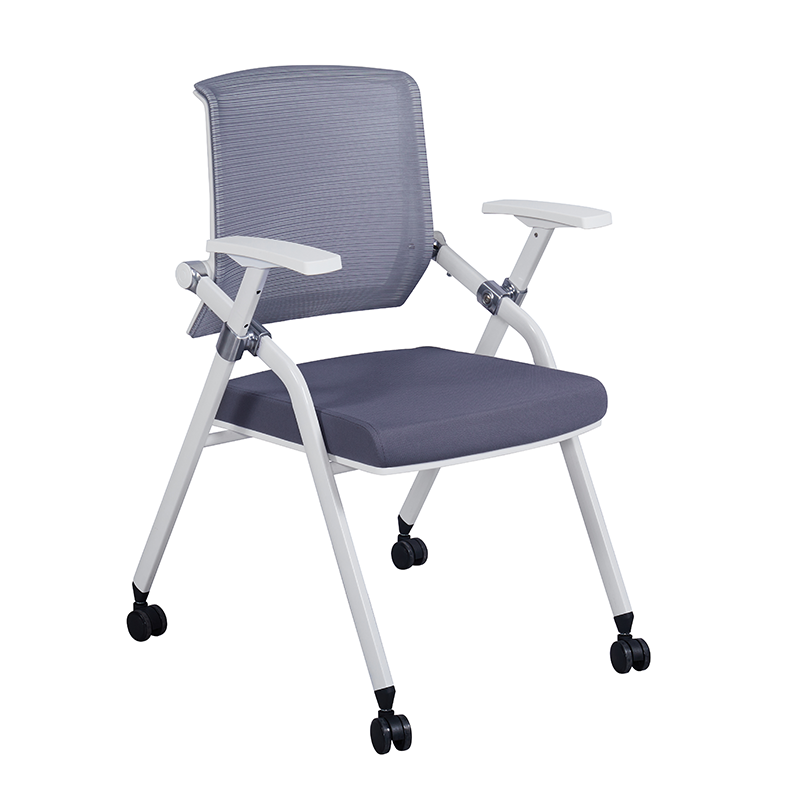
Avoid rigid, flat backs when outfitting a multi-hour environment. A static backrest forces the spine into an unnatural posture. Look for S-curved backrests or tension-adjustable lumbar zones. These designs accommodate diverse body types by maintaining the natural inward curve of the lower spine. Dynamic support mechanisms flex as the user shifts weight. This continuous contact prevents muscle strain during lengthy presentations.
The seat pan dictates lower body circulation. Check for a "waterfall" seat edge. This downward-curving front edge promotes lower body circulation and reduces pressure on the back of the thighs. Standard cut foam degrades quickly under daily use. Require high-density molded foam instead. Molded foam retains its shape over years of compression.
Foam Type | Manufacturing Process | Longevity & Shape Retention | Commercial Suitability |
|---|---|---|---|
Standard Cut Foam | Sliced from larger polyurethane blocks. | Flattens and degrades within 1-2 years. | Low. Recommended only for occasional use. |
High-Density Molded Foam | Injected directly into a contoured seat mold. | Maintains cellular structure for 5+ years. | High. Essential for daily, multi-hour sessions. |
Prolonged, high-occupancy meetings generate significant ambient heat. Trapped body heat creates intense user discomfort. Prioritize mesh backrests for optimal temperature regulation. Woven mesh allows continuous air circulation behind the user. This thermal management keeps attendees alert and comfortable. If you select upholstered backs, ensure the fabric features advanced moisture-wicking properties.
Armrests relieve shoulder tension but complicate space planning. Evaluate fixed versus adjustable armrests based entirely on desk clearance requirements. Fixed armrests often collide with table aprons. This collision prevents users from sitting close to their work surfaces. Adjustable armrests solve this by lowering out of the way. If tables sit unusually low, consider armless variants to ensure perfect clearance.
Multi-purpose rooms benefit immensely from a space-saving training chair. The flip-and-nest design represents the gold standard for daily agility. The seat pan flips vertically upon a pivot joint. This allows multiple units to slide together horizontally, much like grocery carts.
You must measure the exact nesting depth to calculate your required storage footprint. The nesting depth is how many inches each additional chair adds to the stack. A shorter pitch means you can store more units in a smaller closet. Always physically test the flipping mechanism to ensure it operates smoothly without excessive force.
When horizontal space remains strictly limited, a classic foldable training chair is required. These units collapse entirely flat for dense vertical stacking or rack storage. Modern iterations rival standard seating in comfort.
Carefully inspect the hinge mechanism on any folding training chair. Look for hidden pinch-points that could endanger users during setup. Ensure the frame locks securely when deployed. A weak locking mechanism creates a severe safety hazard during use. Best practices dictate choosing models featuring integrated carrying handles for safer transport.
Mobility dictates how effortlessly users can form collaborative groups. Verify caster wheel materials before finalizing your choice. Floor damage occurs when wheels clash with flooring surfaces.
Use soft polyurethane casters for hard floors like wood or polished concrete. They provide grip and prevent scratching.
Use hard nylon casters for carpeted areas. They reduce friction, allowing users to roll easily over plush surfaces.
If the room uses tiered flooring, opt for stationary glides to prevent accidental rolling.
Aesthetically pleasing frames often hide structural weaknesses. You must evaluate the metal gauge of tubular steel frames. Lower gauge numbers indicate thicker, stronger steel walls. Avoid lightweight aluminum if the room endures high-impact daily use. Aluminum bends under sudden heavy loads. Welded steel joints offer vastly superior integrity compared to bolted connections. Check the finishing techniques as well. Powder-coated steel resists chipping and scratching far better than standard liquid paint.
Do not accept standard residential ratings for office environments. Residential furniture rarely faces continuous stress. A commercial-grade seating unit must safely support a minimum of 275 to 300 lbs. Specialized bariatric models support up to 500 lbs. Verifying these load-bearing capabilities protects your organization from liability. It also ensures universal accommodation for all employees and guests. Demand documented proof of load testing from the manufacturer.
Upholstery endures constant friction. Check the "Double Rub" count of all textile sections. This metric comes from the Wyzenbeek test, which simulates a person sliding into and out of the seat. Commercial spaces require textiles rated for at least 50,000 to 100,000 double rubs. Anything lower will show visible wear, pilling, or tearing within the first year. High abrasion resistance keeps the room looking professional despite heavy daily traffic.
Marketing claims regarding durability hold no real weight. Look for ANSI/BIFMA compliance instead. BIFMA provides objective proof of structural integrity. Chairs earning this certification pass rigorous structural, stability, and load-bearing tests. Selecting BIFMA-certified seating guarantees a baseline of safety and endurance. Ask your vendor to supply the specific BIFMA test reports for the models you intend to purchase.
Purchasing armchairs that sit too high to slide under existing tables creates an immediate crisis. When seats cannot tuck away, they block crucial aisle clearance. This reduction in walking space often violates local fire codes. It also makes the room feel cramped and chaotic. You must measure the exact distance from the floor to the underside of the table aprons. Compare this measurement against the highest point of the armrests.
Ambient noise ruins focused environments. Squeaky folding mechanisms distract attendees instantly. Rattling casters create chaotic noise during quiet testing or presentations. Evaluate the acoustic profile of the unit before bulk ordering. Check the caster bearings for smooth, silent operation. Ensure internal springs and pivot joints feature nylon washers or proper lubrication. Silence signifies tight manufacturing tolerances.
Chairs shipped KD (Knocked Down) appear cheaper initially. However, they require significant internal facility hours to assemble. Factoring in the labor cost of assembly changes the financial equation entirely. Complex hardware leads to stripped screws and wobbly frames. Compare this effort against fully assembled or "tool-less" models. Fully assembled shipments arrive ready to deploy, eliminating internal workflow disruptions.
Generic lifetime warranties usually contain deceptive fine print. Reading the exact terms prevents future surprises. Many manufacturers claim a lifetime warranty on the steel frame. They simultaneously restrict coverage on moving mechanisms, gas cylinders, or foam compression to a single year. Moving parts and foam fail long before steel frames bend. Ensure the warranty provides robust coverage for the components most likely to degrade.
Order a Single Sample Unit. Never rely on digital catalogs for ergonomic assessments. Photos cannot convey foam density, lumbar tension, or mechanism smoothness. Secure a physical sample to conduct genuine user trials.
The "Two-Hour" Sit Test. Have employees of varying heights test the chair for a full, uninterrupted meeting. Five-minute tests fail to reveal pressure points. Only sustained sitting exposes inadequate lumbar support or poor foam resilience.
The Spatial Audit. Test the folding or nesting capability inside your actual storage closet. Measure exact aisle widths when chairs are occupied. Verify the units maneuver easily through your specific doorways and corridors.
Vendor Vetting. Confirm realistic lead times. Verify the long-term availability of replacement parts, specifically casters and arm pads. Review the bulk-shipping freight terms to prevent unexpected unloading delays.
Audit your current floor plan: Measure your tables, doorway widths, and storage closet depths to establish strict spatial constraints before browsing catalogs.
Prioritize verifiable standards: Ignore vague durability claims and demand ANSI/BIFMA test reports and Wyzenbeek fabric ratings.
Focus on ergonomic endurance: Select dynamic lumbar features and molded foam to support prolonged human focus.
Request physical samples: Implement a mandatory "two-hour sit test" with diverse staff members to validate real-world comfort.
A: A folding chair collapses completely flat for stacked or vertical storage. A nesting chair typically features a seat that flips up, allowing the chairs to slide horizontally into one another like shopping carts, which is faster for daily room resets.
A: With daily use, a BIFMA-certified commercial chair should last 7 to 10 years. The first components to fail are typically the casters or seat foam, which is why high-density foam and replaceable wheels are critical features.
A: It depends on table usage. Armrests reduce shoulder fatigue for users typing or writing for long periods. However, if the room is tight on space or uses low tables, armless chairs or chairs with integrated tablet arms may be more practical.
A: A hybrid approach is standard: a breathable mesh back for temperature control during crowded sessions, paired with an upholstered, high-density foam seat pan for pressure relief. All fabrics should be rated for high commercial abrasion resistance.


